Thursday 9th October, 2025
Welsh Government’s latest River Summit took place at the end of September, the sixth such meeting since the first was hosted by the then First Minister, Mark Drakeford MS, in the summer of 2022.
While that and subsequent summits have considered all polluting sectors, the latest one was focused entirely on agriculture, so perhaps this is a good time to reflect on the progress the country has made in tackling issues caused by farming over the past three years.
For many rivers across Wales, agriculture is the sector with the largest impact on water quality. A small percentage of farmers consistently pollute. They bring a bad reputation to the whole industry, causing problems not just for rivers but for the wider farming community who are compliant with the agricultural regulations. Their actions also throw doubt on the long-term sustainability of food production in Wales.
Unfortunately, examples of extremely poor land management by some farms continue to surface. Last winter, we took drone footage of bare maize fields and stubble turnips in West and Mid Wales, highlighting the soil runoff dangers they posed to rivers, along with inappropriate and excessive spreading of slurry and manures.
Two drone videos Afonydd Cymru took last winter showing some of the reasons why soil ends up in Welsh rivers: inappropriate landuse.
The first video shows the effects of maize growing in West Wales, the second stubble turnip fields in Mid Wales.

Soil washing off a recently harvested maize field in West Wales this autumn. Even in hot, dry years maize is harvested late so when it is planted in inappropriate places, the risk of soil loss is very high.

Natural Resources Wales published the first assessments of the condition of Wales’s Marine Protected Areas (MPAs) in March this year. They showed widespread failures in coastal Special Areas of Conservation (SACs) and Special Protection Areas (SPAs). Following a similar pattern to the rivers, many of these failures were linked by the regulator to diffuse agricultural pollution.
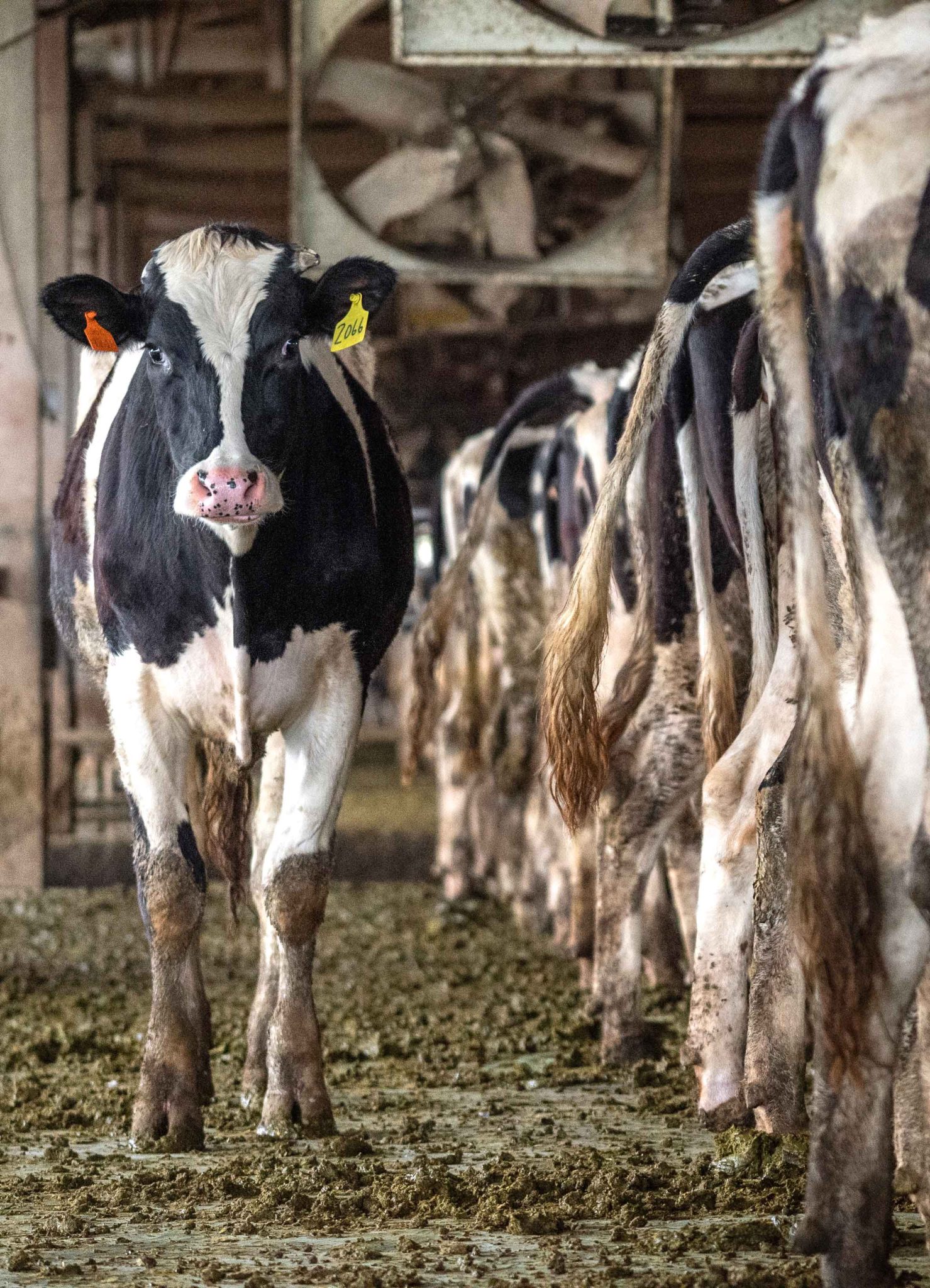
In its latest enforcement report, Natural Resources Wales found the highest rate of non-compliance with the agricultural rules was within the dairy industry, with most breaches relating to slurry management. This is particularly concerning because the rivers of West Wales, where many of the large dairies are located, already have some of the highest nutrient failure rates, including the Eastern and Western Cleddau.
The danger is not just to rivers. Soil is agriculture’s raw material. The sector cannot afford large volumes of it to wash off fields and, ultimately, be lost forever to the sea. In addition, rural communities are left to meet the costs of councils having to de-silt drains and resolve flooding issues.
And in June this year, Natural Resources Wales published the first assessments of the condition of Wales’s Marine Protected Areas (MPAs) showing widespread failures in coastal Special Areas of Conservation (SACs) and Special Protection Areas (SPAs). Following a similar pattern to the rivers, many of these failures were linked by the regulator to diffuse agricultural pollution.
Public awareness is increasing of the problems with agriculture and water quality. Since the first summit, it has been moving up the political agenda too. But has there been any real progress to address the issue?
The agricultural pollution regulations
At the end of March, Welsh Government published the first review of the Water Resources (Control of Agricultural Pollution) (Wales) Regulations 2021 (CoAPR). The independent Chair of the review, Dr. Susannah Bolton, made a total of 23 recommendations to reduce agriculture’s negative environmental impacts.
Welsh Government was quick to commit to all of them, something that was reiterated by the Deputy First Minister in a statement this week. But even though some of these recommendations were classed as ‘short-term ’ back in March, we still await even the beginning of their implementation.
This week’s statement also confirmed that a “new task and finish group to engage on the recommendations and inform the development of proposals” was to be established. Seven months after Dr Bolton’s report was published, this cannot be considered anything close to being the rapid, tangible action that is needed to restore river health in Wales.
Recommendations from the first summit in 2022
In the week following the inaugural summit, the First Minister called for all sectors to face up to their impacts and issued eight recommendations to resolve failing SAC rivers.
To us, what stood out most at the sixth summit was the remarkable lack of any real advancement of those original recommendations over the 3 years since. There remains no progress on an action plan for the agricultural sector, despite the evidence that it is having the greatest impact on both freshwater and marine SAC failure.
Hope for the new farm subsidy scheme
Welsh Government and Natural Resources Wales have pinned their hopes on a new farm subsidy system, the Sustainable Farming Scheme (SFS), to resolve agricultural pollution. But while it undoubtedly has wider environmental merit, the scheme is not going to do much for water. The recent publication of the modelling of the benefit of the SFS underlines how little difference it will make to the areas of Wales that need the greatest change.
SFS, which comes into operation in January, is meant to go above and beyond supporting farmers to do the right thing. However, a regulatory baseline for agriculture is also essential because the SFS is a voluntary scheme and unlikely to be taken up by all farms in Wales. Evidence shows that the areas of Wales whose rivers need the most change are also forecasted to have the lowest farm engagement rates in the scheme.
Progress from the environmental regulator
In January 2024, Natural Resources Wales announced the formation of a new agricultural enforcement team, which was a welcome move by the regulator and something that could be considered genuine progress.
In a report of CoAPR compliance between November 2023 and March 2025, it found that 53% of the 847 farms inspected were in breach of the rules. The highest rate of non-compliance was the dairy industry with most breaches relating to slurry management. This is particularly concerning because the rivers of West Wales, where many of the large dairies are located, already have some of the highest nutrient failure rates, including the Eastern and Western Cleddau.
Unfortunately, a recent decision made by Natural Resources Wales has undone some of its progress in enforcement. In July this year, the regulator announced in a revised pollution response policy that it would be moving towards a more “risk-based approach” and that is was unlikely to attend lower-level pollution incidents.
While some agricultural pollutions have been catastrophic, most are diffuse in nature. Despite the regulator’s claims to be dealing with them through “ongoing regulatory, enforcement, or prevention work…” it is fair to say that its monitoring is currently sub-standard and unlikely in itself to be able to detect pollutions whose cumulative impacts are as devastating for rivers as single, severe incidents.
Meanwhile, on the ground, two more Welsh SAC-designated rivers have slipped into failure against nutrient targets in the past three years (only two of the nine now pass) while river groups and citizen scientists are regularly finding evidence of failure, evidence that the regulator and Government continue push to one side.
Plans to improve the situation?
With increasing failures of SAC rivers comes increasing numbers of development moratoriums.
But this is not just a problem for house-builders. Natural Resources Wales are legally obliged to have effective action plans in place to resolve these issues. We pointed out in November 2022 that the regulator’s core management plans for SAC rivers are not fit for purpose and that plans specifically designed to resolve the issues simply do not exist.
The verdict….
At the first River Summit, held at the Royal Welsh Show on a sweltering July day in 2022, a new resolve to deal with the problems facing rivers appeared to be emerging.
Three years later, however, it is fair to say that we are not much further forward.
Recommendations and measures keep being pushed down the line. Meanwhile, agricultural pollution continues, as does the poor state of river water quality.
Senedd elections in May 2026 are fast approaching us and if polls are to be believed, rivers will play a part in voting decisions. Politicians should not be afraid to face up to these issues as tough measures are needed to bring the small number of polluting farms into line.
This will help not only rivers, biodiversity and society at large, it would be a much deserved reward for the large majority of the agricultural sector that is trying its best to farm responsibly.